
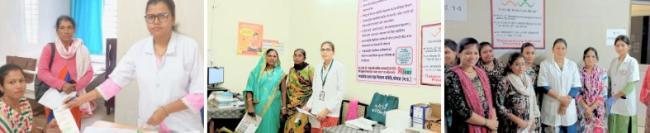
For years, Sankalp has been working to make prenatal diagnosis accessible to families beyond India's metropolitan cities. Today, that work has gained international recognition through the publication of its research article in Blood Global Hematology. This is not just an academic milestone it validates a prevention model that has been bringing safe, high-quality prenatal diagnosis closer to home.
Drawing on Sankalp's prevention programme across 82 districts in five states, the study demonstrates that invasive prenatal diagnosis (IPND) can be delivered safely and effectively in rural and semi-urban India through a decentralised model of local sample collection, centralised genetic laboratories, and comprehensive genetic counselling.
The programme screened 81,139 pregnant women, identified 802 high-risk couples, and successfully performed 495 invasive prenatal diagnoses with a complication rate of just 0.6%. These findings provide evidence that equitable, high-quality prenatal diagnosis can reach families who have traditionally had limited access to such services.
The research was also featured in The Hindu News article, bringing national attention to Sankalp's pioneering prevention model. More than scientific recognition, the publication reinforces Sankalp's commitment to advancing evidence-based prevention.
Read More: https://doi.org/10.1016/j.bglo.2026.100103