
Vikram SaraBhai Space Centre
 Vikram SaraBhai Space Centre (VSSC) is the lead Centre for development of satellite launch vehicles and associated technologies. The Centre pursues active research and development in a host of distinct technology domains like aeronautics, avionics, composites, etc with a view to achieve self-reliance in the high tech realm of launch vehicle technology.The modern era of space research in India can be said to have formally started in 1961 when the Government of India entrusted the study of the subject of space research and of the peaceful uses of outer space to the Department of Atomic Energy (DAE), functioning under the able leadership of Dr. Homi J Bhabha. In 1962 DAE set up Indian National Committee for space Research (INCOSPAR) with Prof. Vikram Sarabhai as chairman to organize a national space programme. One of the first things that INCOSPAR took up was the establishment of Thumba Equatorial Rocket Launching Station (TERLS) at Thumba, near Thiruvananthapuram
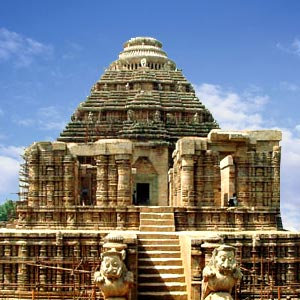 The magnificent Sun Temple at Konark is the culmination of Orissan temple architecture, and one of the most stunning monuments of religious architecture in the world.Built by the King Narasimhadeva in the thirteenth century, the entire temple was designed in the shape of a colossal chariot with seven horses and twentyfour wheels , carrying the sun god, Surya, across the heavens. Surya has been a popular deity in India since the Vedic period."Konarka" , the place bears a name composed of two World elements : Kona meaning corner and ARKA meaning the Sun. The main Temple was called by European sailers "The Black Pagoda" as it formed an important landmark for them in their coastal voyage. Contrasting to this , the white washed Temple of Lord Jagannath at Puri was known as the white pagoda.
 The bhangra is a folk dance that has its roots in the region of Punjab in northwest India.Unlike other folk dances which usually fail to catch the interest of the masses outside their particular community or geographical region, bhangra has managed to transcend its label as being merely a folk dance to be performed by Punjabi sons of the soil. Bhangra has developed as a combination of dances from different parts of the Punjab region. The term "Bhangra" now refers to several kinds of dances and arts, including Jhumar, Luddi, Giddha, Julli, Daankara, Dhamal, Saami, Kikli, and Gatka. Jhumar, originally from Sandalbar, Punjab, comprises an important part of Punjab folk heritage.
 The National Defence Academy is a premier Inter Service training institution where future officers of Armed Forces are trained. The training involves an exacting schedule of 3 years before the cadets join their respective Service Academies, viz. Indian Military Academy, Naval Academy and Air Force Academy.The history of soldiering in India goes back to the medieval ages when India defended its western borders against attacks from the West. The names of Porus and Chandra Gupta Maurya immediately come to mind, who gave Alexander the great, his first taste of tough resistance and defeat. The history of present day Army can be traced back to the days of East India Company when the Presidency armies, namely the Bombay,Madras and Bengal Presidencies started recruiting Indian troops.
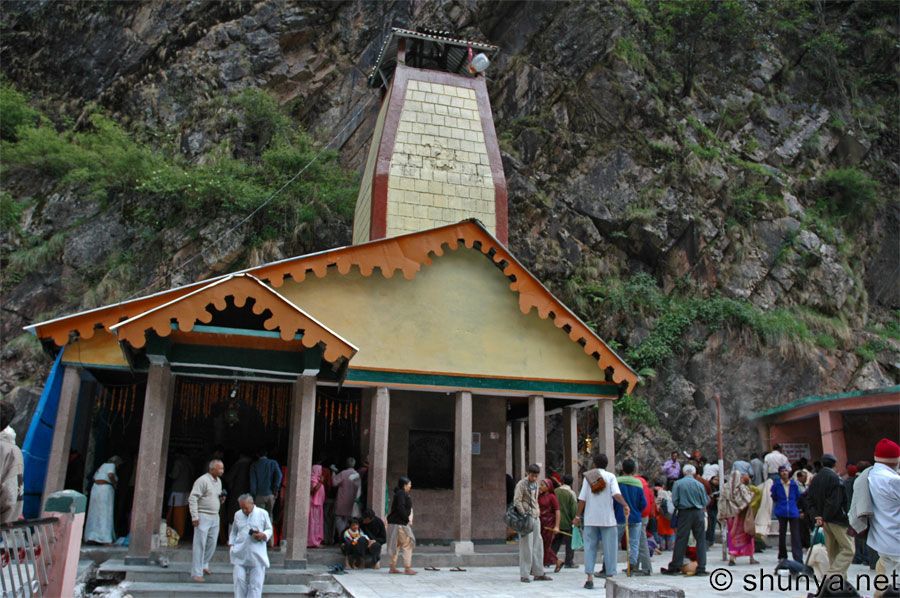 Char Dham is the most important Hindu pilgrimage circuit in the Indian Himalayas. Located in the Garhwal section of the state of Uttarakhand (formerly the northwestern section of Uttar Pradesh), the circuit consists of four sites—Yamunotri, Gangotri, Kedarnath , and Badrinath. While each site is unique in its own fashion, inclusion in the Char Dham has, over time, caused them be viewed together in popular imagination and actual pilgrimage practice.